


Dental implants vs dentures is one of the most common decisions patients face after tooth loss — and it is rarely as simple as “which one is cheaper.”
Both options replace missing teeth and restore the ability to eat and speak. But they work differently, feel different in daily life, and carry very different consequences for your jaw, your bone structure, and your long-term health. Choosing between them without understanding those differences means making a significant medical decision on incomplete information.
This guide covers the key differences between dental implants vs dentures — clearly, without the sales pitch — so you can make the right call for your situation.
WHAT ARE DENTAL IMPLANTS?
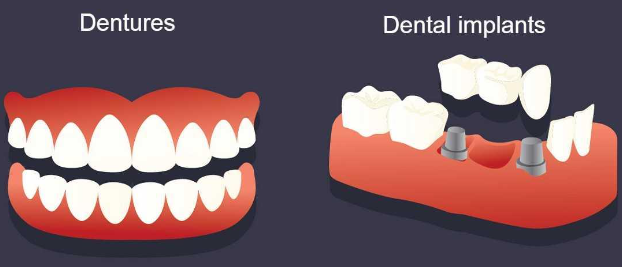
A dental implant is a titanium post surgically placed into the jawbone, which then fuses with the bone in a process called osseointegration. Once integrated — typically over 3 to 6 months — a crown, bridge, or full-arch prosthesis is attached on top.
The result is a fixed, permanent tooth replacement that functions like a natural tooth. It does not come out. It does not shift. It is cleaned the same way as a natural tooth.
Impianti dentali are suitable for replacing a single tooth, multiple teeth, or an entire arch through systems like All-on-4 or All-on-6.
WHAT ARE DENTURES?
Dentures are removable prosthetics — either a full set replacing all teeth in an arch, or partial dentures filling gaps while natural teeth remain. They rest on the gum tissue and, in the case of full dentures, rely on suction and adhesive to stay in place.
They are fabricated outside the mouth and fitted to the gum’s shape. Dentures require daily removal for cleaning and typically need relining or replacing every 5 to 8 years as the jaw changes beneath them.
KEY DIFFERENCES: DENTAL IMPLANTS VS DENTURES
1. Bone Preservation
This is the most clinically significant difference — and the one with the greatest long-term impact on your health.
When a tooth root is lost, the jawbone beneath it begins to resorb. Without the stimulation a root provides, the body gradually reabsorbs that bone tissue. Over years, this causes the face to develop a sunken appearance, the jaw shape to shift, and dentures that once fitted well to become loose.
They address this directly. The titanium post acts as a replacement root, stimulating the jawbone with every bite and halting resorption. Patients who choose implants retain their jaw structure long-term. Those with conventional dentures typically do not.
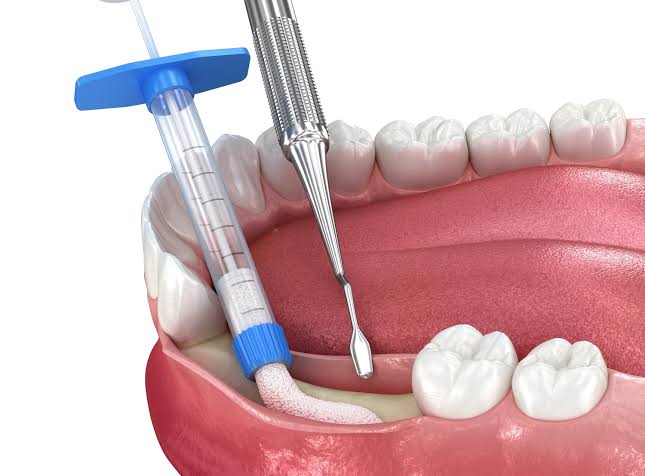
The consequence is not only cosmetic. Progressive bone loss from wearing dentures can eventually make implant placement far more complex — requiring innesto osseo before treatment becomes possible.
2. Comfort and Stability
A well-placed implant does not move. It is anchored in bone, functions like a natural tooth, and requires no adhesive, soaking, or nightly removal. Most patients report that implants feel indistinguishable from their natural teeth within a few months of placement.
Dentures can slip — particularly lower dentures, which have less surface area to grip. Many wearers find that dentures shift when eating harder foods, cause gum soreness over time, and require periodic adjustment as the jaw changes beneath them.
Implant-supported dentures offer a middle ground: dentures clipped onto implant posts for improved stability, at a lower cost than a full set of individual implants. This is a practical option for patients needing full-arch replacement on a tighter budget.
3. Longevity
A titanium implant post, placed correctly with certified materials, can last a lifetime. The crown on top typically needs replacing after 10 to 15 years. Clinical studies show 20-year survival rates of 90–93% for well-placed implants.
Conventional dentures last 5 to 8 years before needing relining or full replacement — because the jaw beneath them is constantly changing shape. Over a 20-year period, the cumulative cost of replacing and relining dentures can equal or exceed the upfront cost of implants.
4. Eating and Speech
Bite force matters. Natural teeth generate around 200 to 250 pounds per square inch. Implants restore approximately 80–90% of that force. Full dentures restore roughly 20–25%.
For patients who value a varied diet — raw vegetables, meat, crusty bread — that difference is felt every day. Many long-term denture wearers report narrowing their diet progressively to accommodate what their prosthetics can handle.
Speech is affected too. Ill-fitting dentures can produce clicking sounds or distort certain consonants. Fixed implants have no such effect.
5. Daily Maintenance
They are maintained exactly like natural teeth: brushing, flossing, and regular professional cleaning. There is no removal routine, no soaking solution, no adhesive.
Dentures require daily removal, cleaning with a separate brush and solution, and overnight soaking. Many patients adapt without difficulty — but it is a daily routine that implant patients simply do not have.
6. Cost: Upfront vs Long-Term
Dentures cost less upfront. A full conventional set typically runs €800–€2,000. A full implant-supported arch via All-on-4 or All-on-6 costs €5,000–€7,000 at a reputable clinic in Albania — and significantly more in Western Europe.
That gap is real. But over time it narrows considerably. Dentures need relining, adjusting, and eventually replacing. Each intervention carries a cost. Add in the potential cost of treating progressive bone loss, and the long-term economics of dental implants vs dentures shift materially.
Implants cost more at the outset. They cost less over a lifetime.
COMPARISON AT A GLANCE
| Factor | Implantologia Dentale | Dentiere |
|---|---|---|
| Bone preservation | Yes — prevents resorption | No — bone loss continues |
| Stability | Fixed, does not move | Can slip, requires adhesive |
| Lifespan | 25 years to lifetime | 5–8 years before replacement |
| Bite force | 80–90% restored | 20–25% restored |
| Maintenance | Brush and floss as normal | Daily removal and soaking |
| Upfront cost | Higher | Lower |
| Long-term cost | Lower | Higher over time |
WHICH OPTION IS RIGHT FOR YOU?
Implants are the better long-term solution for most medically suitable patients. The key criteria: adequate bone volume, no uncontrolled systemic conditions, and non-smoker status — or willingness to quit before and during the healing period.
Dentiere remain a valid choice for patients who are not surgical candidates, who need an immediate temporary solution, or for whom the upfront cost of implants is genuinely out of reach right now.
The dental implants vs dentures decision ultimately comes down to your health, your timeline, and your priorities. A clinical assessment gives you the concrete information — bone volume, suitability, cost — to make it properly.
TREATMENT IN ALBANIA
Both options are available at Evo Dental Clinic in Tirana. Patients considering implants will find that Albania offers prices 60–70% below the UK and Western Europe, using the same internationally certified implant systems available at top European clinics.
A free consultation provides a written assessment of your situation, including bone volume, suitability, and a full cost breakdown — before you commit to anything.