


Dental implants are the most durable tooth replacement option available. With proper placement and care, they can last 25 years or longer — and in many cases, the implant post itself lasts a lifetime.
That lifespan is not automatic. How long it holds depends on several factors: the quality of the system used, the precision of the surgeon who placed it, how well the patient maintains oral hygiene, and whether underlying health conditions are managed properly.
This guide covers everything you need to know about implant longevity — what supports it, what shortens it, and what you can do to protect your investment for the long term.
HOW LONG DO DENTAL IMPLANTS ACTUALLY LAST?
The clinical data is consistent across multiple decades of research:
- 10-year survival rate: 95–97% for well-placed implants
- 20-year survival rate: 90–93% in patients with good oral hygiene
- Lifetime potential: The titanium post can last indefinitely if osseointegration is successful and bone remains healthy
It helps to think about two separate components. The implant post — the titanium screw set into the jawbone — is the most durable part. It rarely fails in patients with healthy bone and good hygiene. The crown attached on top is exposed to daily chewing forces and typically needs replacing after 10 to 15 years, even when the post beneath it is functioning perfectly.
So the accurate answer to “how long do dental implants last” is this: the post can last a lifetime; the restoration on top will likely need replacement once or twice over that same period.
WHAT FACTORS AFFECT HOW LONG DENTAL IMPLANTS LAST?
Implant Brand and Material Quality
Not all implant systems are equal. Certified international brands — Nobel Biocare, Straumann, Osstem — are manufactured to precise tolerances, use medical-grade titanium, and carry decades of clinical outcome data. Lower-cost implants from uncertified manufacturers carry meaningfully higher failure risks. The surface treatment, thread design, and alloy composition all affect how well the post bonds with bone and how long it holds.
At Evo Dental Clinic, only internationally certified systems are used. Every patient receives documentation of the brand and serial number, including the manufacturer warranty.
Surgical Skill and 3D Planning
Placement precision directly affects long-term outcomes. A post placed at the wrong angle, at insufficient depth, or without proper bone assessment carries a significantly higher rate of early failure.
Modern implant planning relies on 3D CBCT imaging — a full volumetric scan showing exact bone density, width, and depth at the planned site. This lets the surgeon determine the precise position and angle before the procedure begins. Clinics that skip 3D scanning and rely on standard 2D X-rays are making assumptions about bone volume that the data does not support.
Osseointegration — The Foundation of Long-Term Stability
Dental implants work by fusing to the jawbone through a process called osseointegration. Over 3 to 6 months after placement, bone tissue grows around and bonds to the titanium surface. Once that bond is established, the post becomes structurally part of the jaw.
If osseointegration fails — due to infection, poor bone quality, smoking, or uncontrolled diabetes — the post will loosen and must be removed. This is the most common cause of early failure.
Key risk factors that compromise osseointegration:
- Smoking — reduces blood flow to bone and significantly raises failure rates
- Uncontrolled diabetes — impairs healing and increases infection risk
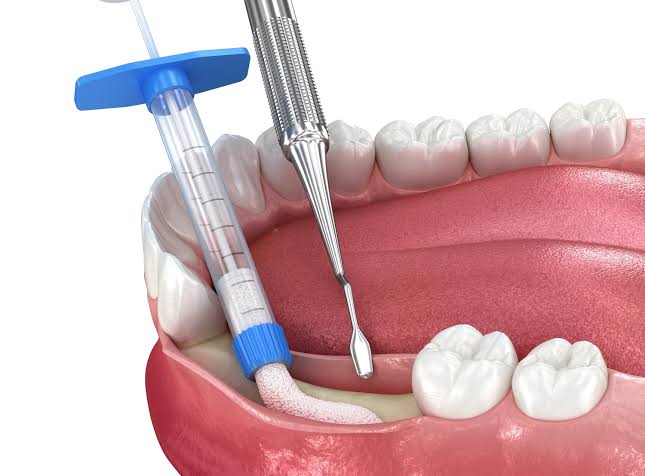
- Insufficient bone volume — bone grafting may be required before placement
- Poor surgical technique — overheating bone during drilling damages the tissue needed for integration
Oral Hygiene After Placement
The titanium post cannot decay — but the gum and bone surrounding it can still be damaged by bacteria. Peri-implantitis is an inflammatory condition affecting the tissue around the implant, caused by the same bacterial buildup that causes gum disease around natural teeth. Left untreated, it is the leading cause of long-term failure.
It progresses slowly and often without pain, which makes regular check-ups essential. Proper maintenance includes brushing twice daily with a soft-bristled brush, using interdental brushes or a water flosser, and professional cleaning at least twice per year.
Overall Health and Bone Density
The post depends on healthy bone for long-term stability. Conditions that reduce bone density — osteoporosis, long-term corticosteroid use, certain cancer treatments — can weaken that foundation over time. Patients with these conditions are not automatically excluded, but they require thorough assessment before placement. Bone grafting or modified implant designs may be necessary.
HOW LONG DO DENTAL IMPLANTS LAST IN ALBANIA?
A common concern for patients considering treatment abroad is whether the result will last as long as it would at home. The honest answer: longevity depends on clinical factors, not geography.
An Osstem post placed using 3D-guided surgery in Tirana integrates and performs the same as an identical post placed in London. The titanium does not know which country it is in. What determines how long dental implants last is the brand used, the imaging behind the planning, the surgeon’s experience, and the aftercare provided.
At Evo Dental Clinic, every case is planned with 3D scanning, placed using certified systems, and supported with full documentation and structured follow-up for international patients. Those considering full mouth rehabilitation or All-on-X procedures receive the same clinical rigour at every stage.
REALISTIC LIFESPAN BY COMPONENT
| Component | Expected Lifespan |
|---|---|
| Titanium implant post | 25 years to lifetime |
| Crown (porcelain/zirconia) | 10–15 years |
| Abutment | 10–20 years |
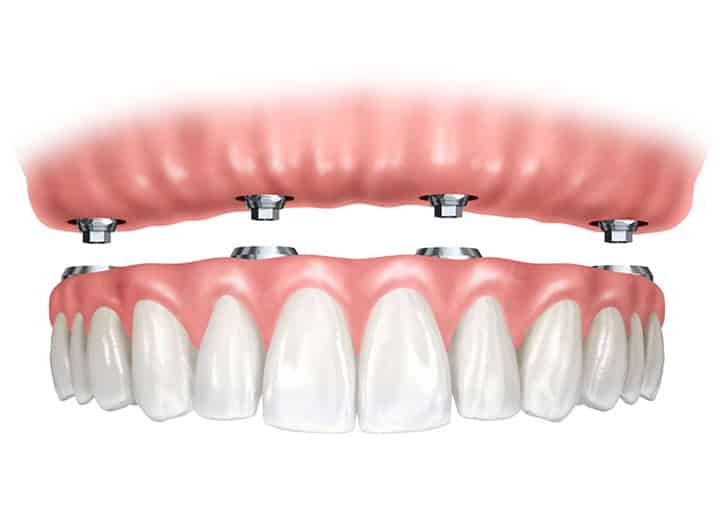
| Full-arch bridge (All-on-4/6) | 15–25+ years with maintenance |
These figures assume consistent oral hygiene, regular professional check-ups, and no significant health changes affecting bone density. In younger patients with good general health, the post can realistically last a lifetime with the crown replaced once or twice.
SIGNS THAT SOMETHING MAY BE WRONG
Failures rarely happen without warning. Patients who act early can often save their dental implants. Watch for:
- Any movement in the post — a stable implant should not shift at all
- Persistent pain beyond the normal healing period
- Swelling or bleeding gums at the implant site
- Receding gum tissue that exposes the post
- New difficulty chewing that was not present before
Early-stage peri-implantitis is treatable. Late-stage bone loss typically is not. Prompt assessment matters.
THE BOTTOM LINE
Dental implants are the most reliable long-term solution for missing teeth. The implant post can last a lifetime. The crown will need replacing. The full system performs as expected when placed correctly, with certified materials, by a qualified surgeon.
How long it lasts is not a lottery — it is the predictable result of good planning, verified materials, and consistent care. Patients who understand that are in a position to make it work in their favour, wherever they choose to be treated.
If you want a written treatment plan with full material documentation before committing to anything, Evo Dental Clinic offers a free consultation for international patients.