


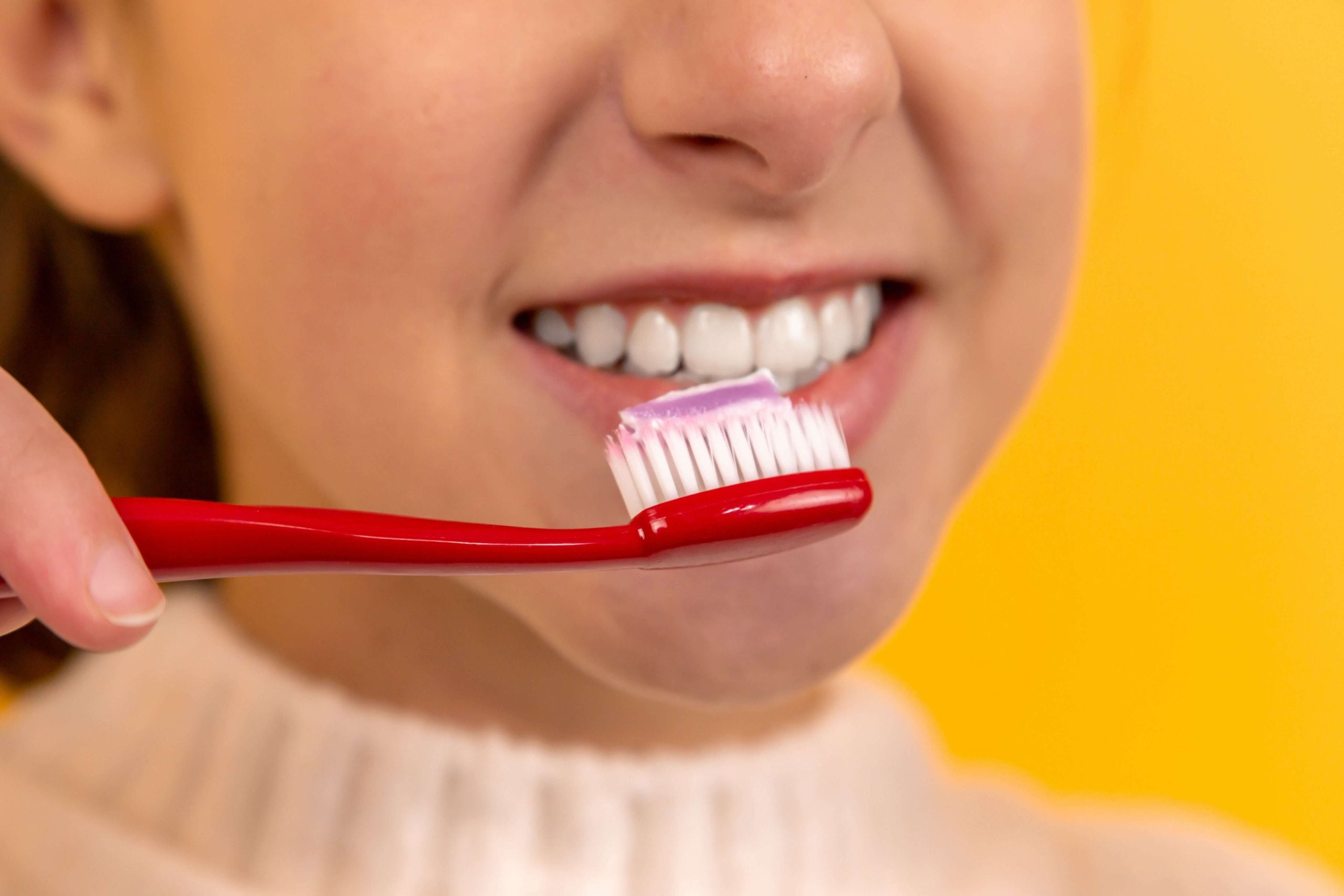
Most people spend more time choosing what to eat for breakfast than they spend caring for their teeth. The average brushing session lasts 45 seconds. The recommended minimum is two minutes. That gap — repeated twice a day, every day — is where gum disease, decay, and premature tooth loss begin.
A complete smile routine does not require expensive equipment or a lot of time. Nine minutes split across morning and evening covers everything your mouth needs. Here is exactly what that looks like, why each step matters, and the order that makes it most effective.
WHY YOUR SMILE ROUTINE ORDER MATTERS
Most people brush, rinse, and consider the job done. That sequence actually undermines the result.
Rinsing with water immediately after brushing washes away the fluoride that was just applied to the teeth. Fluoride needs time in contact with the enamel to remineralise and protect against acid attack. Rinsing neutralises most of that benefit within seconds.
The sequence below is ordered to maximise what each step actually does — not just to feel thorough.
THE MORNING SMILE ROUTINE — 4 MINUTES
Step 1 — Tongue scraping (30 seconds)
Before anything else, scrape the tongue from back to front 5 to 7 times with a metal or silicone tongue scraper.
Overnight, bacteria multiply rapidly on the tongue’s surface. That coating is the primary source of morning breath and adds a bacterial load to everything that follows if not removed first. Removing it before brushing means you are not simply redistributing it around the mouth.
Step 2 — Floss or interdental brushes (60 seconds)
Floss or interdental brushes before brushing — not after. The purpose is to dislodge debris and break up plaque between the teeth so that the fluoride toothpaste applied in the next step can reach those surfaces.
Flossing after brushing does clean between the teeth, but it removes the fluoride that was just applied to interproximal surfaces. Flossing first preserves that protection.
For anyone with gaps between teeth or existing bridgework, interdental brushes sized to fit each gap are more effective than floss alone.
Step 3 — Brush for two minutes (120 seconds)
Use a soft-bristled brush — manual or electric — and fluoride toothpaste. Electric toothbrushes with a pressure sensor reduce the risk of over-brushing, which damages enamel and causes gum recession over time.
Two minutes is not a rough guide. Set a timer. Most people who think they brush for two minutes actually stop at 50 to 60 seconds. The difference in plaque removal between 45 seconds and two minutes is significant.
Work in quadrants: upper left, upper right, lower left, lower right — 30 seconds each. Angle the brush at 45 degrees to the gum line to clean the gum margin where plaque accumulates.
Do not rinse. Spit out the excess toothpaste but leave the fluoride residue on the teeth.
Step 4 — Mouthwash (30 seconds)
Use a fluoride mouthwash at a different time of day to brushing — morning is ideal if you brush at night, or at least 30 minutes after brushing if used in the same session. Swish for 30 seconds and do not eat or drink for 30 minutes after.
Alcohol-based mouthwashes kill bacteria effectively but dry the oral mucosa with repeated use. An alcohol-free fluoride rinse provides the protective benefit without compromising the saliva film that naturally defends against bacterial overgrowth.
THE EVENING SMILE ROUTINE — 5 MINUTES
The evening smile routine is more important than the morning one. While you sleep, saliva production drops significantly, bacteria multiply faster, and there is no eating, drinking, or swallowing to mechanically clear debris. Whatever goes to bed with your teeth stays there for 6 to 8 hours.
Step 1 — Tongue scrape (30 seconds)
Repeat the tongue scrape from the morning routine. The evening removal reduces the overnight bacterial load significantly.
Step 2 — Floss or interdental brushes (90 seconds)
Give the evening flossing session more time than the morning. This is the primary clean of the day — removing all the debris and plaque that has accumulated since morning. Take time with the back teeth, where the toothbrush reaches least effectively and where most interproximal decay begins.
If you use a water flosser, this is where it earns its place: particularly useful around implants, bridges, and orthodontic work where standard floss is difficult to thread.
Step 3 — Brush for two minutes (120 seconds)
Same technique as the morning — two full minutes, quadrant by quadrant, 45-degree angle to the gum line, soft bristles.
The evening brush is the last line of defence before the long overnight period. Do not abbreviate it.
Do not rinse. Leaving fluoride on the teeth overnight delivers the maximum remineralisation benefit. The residue left from spitting — without rinsing — continues protecting the enamel for hours.
Step 4 — Targeted extras (60 seconds)
For anyone with specific concerns, 60 seconds before bed is when targeted treatments work best:
- Sensitivity toothpaste used as a gel: Apply a small amount to sensitive areas with a finger and leave it. The active desensitising compound (typically potassium nitrate or stannous fluoride) works by slow absorption into exposed dentine tubules — it needs contact time, not rinsing.
- Orthodontic wax: For anyone with braces or aligners, check and cover any sharp points causing gum irritation.
- Night guard: If you have been prescribed a night guard for bruxism, rinse it, insert it, and do not eat or drink anything except water afterwards.
WHAT THE RESEARCH SAYS ABOUT SMILE ROUTINES
The clinical evidence for each component of this smile routine is well established:
- Fluoride toothpaste reduces decay incidence by 20–40% compared to brushing without fluoride
- Interdental cleaning (floss or interdental brushes) reduces gingivitis by 35% compared to brushing alone
- Tongue scraping reduces volatile sulphur compounds — the compounds responsible for bad breath — by up to 75% compared to brushing the tongue
- Not rinsing after brushing increases fluoride retention on the tooth surface by up to 50% compared to rinsing
The nine-minute total is not arbitrary. It is the minimum time needed to do each step properly. Cutting it to five minutes means cutting steps — and cutting steps means leaving the gaps that cause the problems patients eventually need treatment for.
WHEN THE ROUTINE IS NOT ENOUGH
A smile routine prevents problems. It does not reverse existing ones.
Gum disease that has progressed beyond the surface layer, decay that has reached the dentine, a cracked tooth, or an infection: none of these resolve with better home care. They require professional treatment.
The role of a dental check-up is to catch the things a home routine cannot — changes in the gum pocket depths, early enamel lesions not yet visible to the patient, failing restorations, and early signs of conditions like oral cancer that have no symptoms in their initial stages. For most adults, twice-yearly professional cleaning and assessment covers this.
If you have not had a dental check-up recently, or if you are experiencing sensitivity, bleeding gums, or discomfort that a consistent smile routine has not resolved, a professional assessment is the right next step.
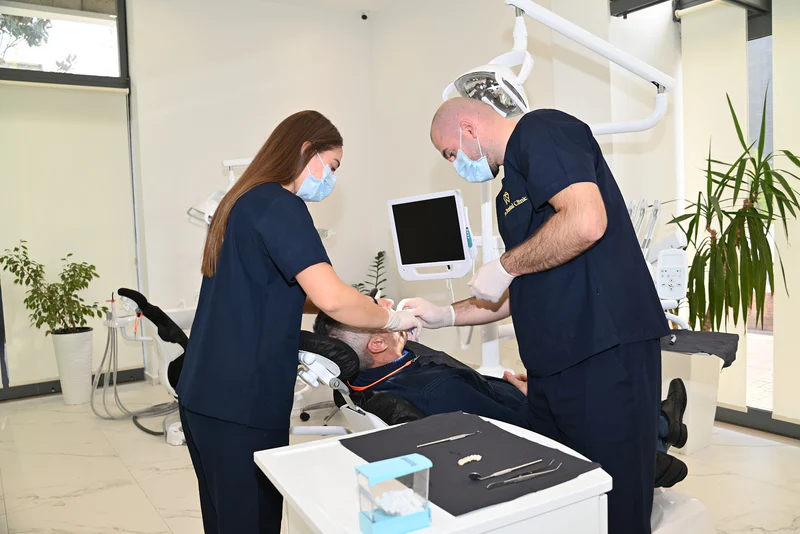
Evo Dental Clinic in Tirana offers full dental assessments and professional cleaning for international patients, at 60–70% below UK and Western European prices. For patients who need more than a clean — fillings, gum treatment, or aesthetic work — Tirana is a short flight from most European capitals and a fraction of the cost.