


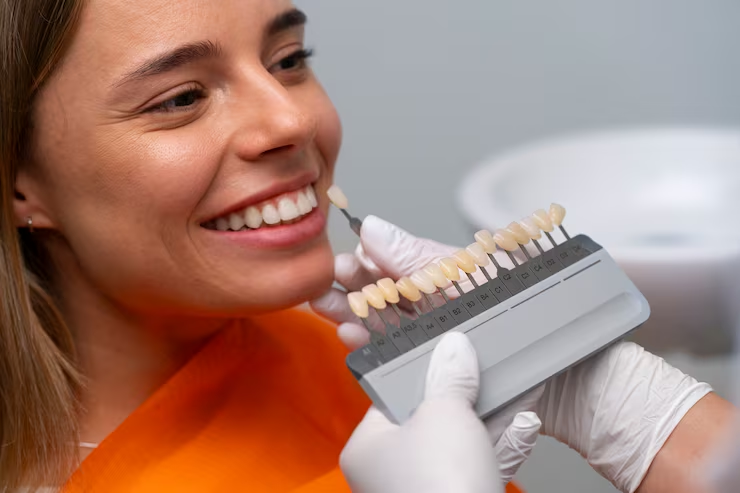
The lifespan of veneers is one of the first practical questions patients ask once they’ve decided veneers are the right treatment — and it’s a fair one. Veneers represent a significant investment in both cost and commitment. Understanding how long they last, what determines that lifespan, and what can shorten or extend it gives patients the information they need to protect the result for as long as possible.
The short answer is that porcelain veneers last 10 to 20 years with proper care, and composite veneers last 5 to 7 years. But those figures are ranges, not guarantees, and the difference between a veneer case that reaches 20 years and one that needs replacing at 8 comes down to three variables that are largely within the patient’s control: the material used, the quality of placement, and daily habits over the life of the restoration.
Here is what clinical evidence says, what the variables actually mean in practice, and what every patient with veneers — or planning to get them — should know about keeping them in the best condition for as long as possible.
Porcelain Veneers: What the Clinical Data Shows
Porcelain veneers are the most durable and most studied material in cosmetic veneer dentistry. A systematic review of feldspathic porcelain veneers found an overall cumulative survival rate of 87% based on a median follow-up of 8 years across studies ranging from 1.7 to 20 years. Clinical studies consistently show a survival rate of approximately 95% at 10 years when veneers are placed correctly and maintained well, falling to around 85% at 15 years.
In practical terms, this means that a well-placed set of porcelain veneers, maintained with consistent oral hygiene and regular professional check-ups, has an excellent probability of remaining intact and aesthetically sound at the ten-year mark — and a strong probability of still functioning well at fifteen years. Cases lasting 20 years and beyond are regularly documented in the literature and in clinical practice. The figures that matter for the average patient planning a veneer case in their thirties or forties are 15 to 20 years as a realistic well-cared-for expectation, with the caveat that replacement is not a failure — it is a normal part of the veneer lifecycle.
E-Max veneers, a specific type of pressed ceramic veneer made from lithium disilicate, have gained significant ground as a material in recent years. Their semi-transparent optical quality closely replicates the light-reflecting properties of natural enamel, making them the material of choice when the aesthetic standard is the highest priority. E-Max veneers are highly durable and, when placed with correct technique and maintained appropriately, match or exceed the longevity of traditional feldspathic porcelain. Many cosmetic dentists now report E-Max as their primary material for anterior veneers precisely because it combines optimal aesthetics with reliable long-term performance.
Porcelain of any type is highly stain-resistant. The ceramic surface does not absorb pigments from coffee, red wine, tea, or tobacco the way natural enamel does. This is one of the most practically significant advantages of porcelain over composite — the colour at the time of placement is effectively the colour for the life of the veneer, provided the bonding margins where the veneer meets the tooth are kept clean and in good condition.
At Evo Dental Clinic, porcelain veneers are fabricated using E-Max ceramic or high-quality feldspathic porcelain depending on the clinical requirements of the case, with the choice of material discussed explicitly with the patient as part of the treatment planning process.
Composite Veneers: Shorter Lifespan, Different Role
Composite veneers are made from a tooth-coloured resin that is applied and sculpted directly onto the tooth surface in a single appointment, without a laboratory fabrication stage. Their primary advantage is speed and cost — the entire treatment is complete in one visit, and the per-tooth cost is substantially lower than porcelain.
The trade-off is lifespan. Composite veneers last 5 to 7 years on average. The material is softer than porcelain, more susceptible to surface wear from daily chewing forces, and more porous — which means it absorbs staining compounds from food and drinks more readily over time. The colour stability that makes porcelain so well-suited to long-term aesthetics is not a characteristic of composite. By years five to seven, most composite veneers will show some degree of colour shift, surface dulling, and wear at the edges that either requires professional polishing and repair or full replacement.
This does not make composite veneers a poor choice — it makes them the right choice for a specific patient profile. A patient who wants an immediate cosmetic result at a lower upfront cost and is comfortable with the expectation of replacement or renewal in five to seven years is well-served by composite. A patient who wants the result to last fifteen years or more without significant maintenance is better served by porcelain from the start.
The reversibility of composite is a relevant advantage for younger patients making their first foray into cosmetic dentistry. Because composite veneers require minimal or no enamel preparation, a patient who wants to upgrade to porcelain in the future can do so without having compromised the underlying tooth. This flexibility makes composite a reasonable starting point for patients who want to experience the aesthetic result before committing to the permanent preparation that porcelain requires.
Our composite veneers page covers the full process and what the result looks like, with before and after documentation from patients who chose this option.
The Three Factors That Determine How Long Your Veneers Actually Last
Material type sets the ceiling. What happens within that ceiling is determined by placement quality, oral hygiene, and daily habits.
Placement Quality
The lifespan of veneers is fundamentally determined at the moment of bonding. A veneer that is precisely fitted, correctly prepared, and bonded with appropriate technique and high-quality adhesive will outlast a poorly fitted veneer regardless of material. The preparation of the tooth surface before bonding, the quality of the bonding agent, the precision of the veneer fabrication, and the accuracy of the marginal fit — where the veneer edge meets the prepared tooth surface — all contribute directly to how long the bond remains intact and how resistant the margins are to micro-leakage and recurrent decay.
This is why the quality of the dental laboratory and the expertise of the placing dentist are not peripheral concerns. They are the primary determinants of whether a case performs at the high end of the expected lifespan range or the low end. Veneers placed with precision at a specialist cosmetic dental clinic, using high-quality ceramics from a skilled laboratory, consistently outperform veneers placed with less care, regardless of what the patient does afterward.
At Evo Dental Clinic, every veneer case is completed by a cosmetic dentistry specialist with specific training and experience in anterior aesthetic cases. Our laboratory partners produce to a standard that supports the full expected lifespan of each material. Our Hollywood Smile design page shows what comprehensive cosmetic case planning looks like at the level required for long-term results.
Oral Hygiene
Veneers themselves cannot develop decay — ceramic and composite resin are not susceptible to the bacterial acids that cause tooth decay. But the tooth beneath the veneer is, and the margin where the veneer meets the tooth is the critical vulnerability. Bacteria that accumulate at the gumline and veneer margin over time can undermine the bond and allow decay to begin at the edge of the preparation.
Brushing twice daily with a non-abrasive toothpaste, flossing daily, and attending professional cleaning appointments every six months are the baseline habits that protect the margins and the underlying teeth throughout the lifespan of the veneers. Abrasive toothpastes — whitening formulas and certain gel pastes — should be avoided, as they scratch the veneer surface over time and accelerate the surface dulling that eventually leads to replacement.
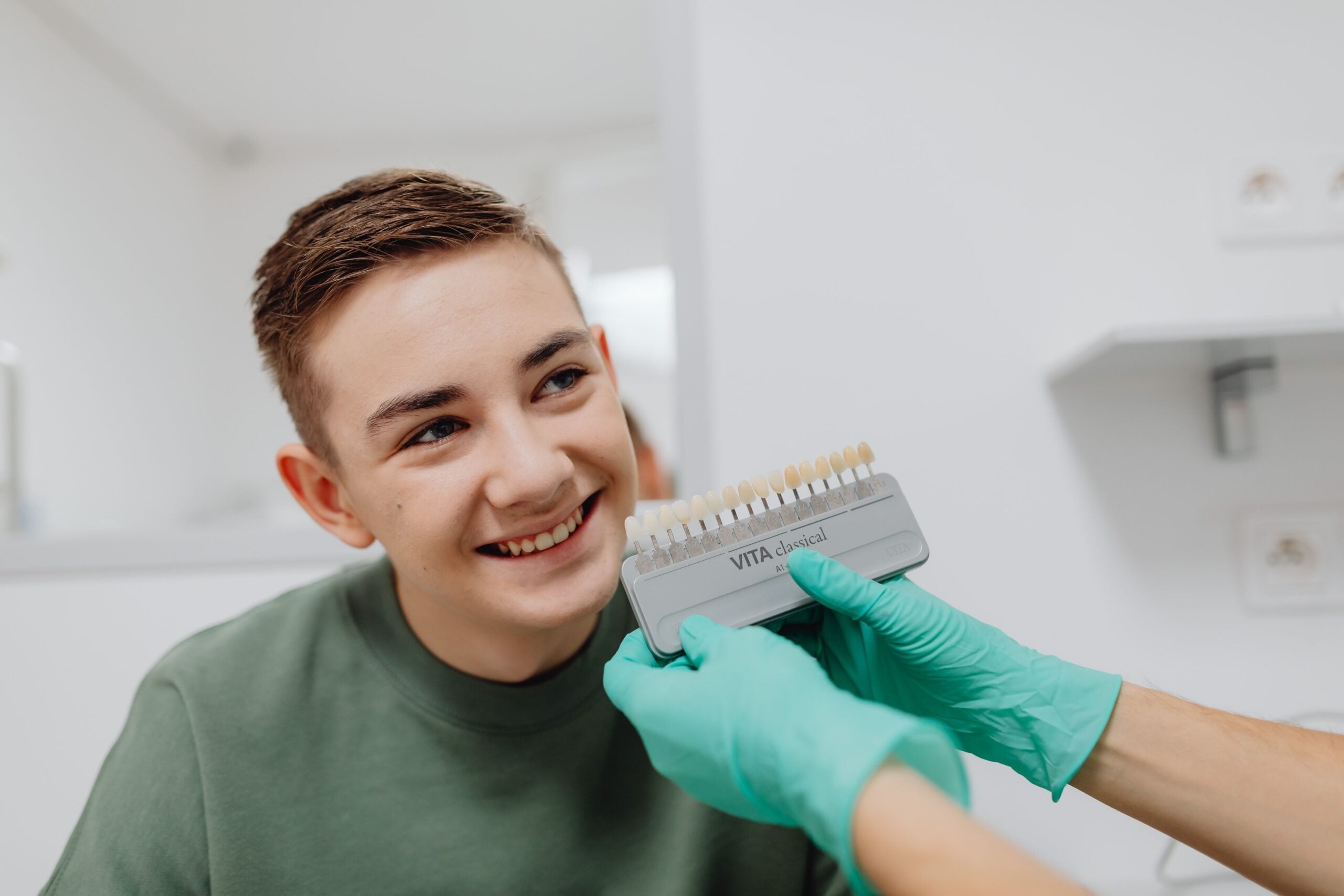
Whitening agents — peroxide bleaching systems — have no effect on ceramic or composite veneer material. This is important to understand before placing veneers: the shade chosen at the time of placement is permanent. Patients who want their veneers to match a brighter shade than their current natural teeth should complete whitening before the veneers are fabricated, not after.
Daily Habits
The habits that most consistently shorten the lifespan of veneers are bruxism — night-time tooth grinding — and the use of teeth for tasks they are not designed for: biting nails, chewing ice, opening packaging with teeth, or biting into very hard foods directly with the front teeth.
Bruxism is the most clinically significant of these because it applies repeated, high-force lateral stress to the veneer surface and bond during sleep, when the patient has no conscious control over the force being applied. Patients who grind their teeth and have veneers placed without a protective nightguard are placing their veneers under a level of stress that will accelerate wear and fracture risk. A custom-fitted nightguard worn consistently during sleep is one of the most effective protective measures available, and it is a standard recommendation for any veneer patient with a bruxism history.
Ceramic veneers are highly resistant to normal chewing forces on softer foods. They are not designed to withstand the specific forces of biting directly into very hard foods — hard crusty bread bitten with the front edge of the veneer, hard sweets, ice cubes — where the point loading can cause fracture or debonding. Normal eating habits with reasonable care produce no issues for the expected lifespan of the restoration.
When Veneers Need to Be Replaced
The most common reasons veneers require replacement before their expected lifespan are chipping or fracture of the ceramic, debonding — the veneer separating from the tooth — decay at the veneer margin, and aesthetic concerns as the veneer ages.
Minor chips in composite veneers can often be repaired by adding material. Porcelain fractures typically require replacement of the affected veneer. Debonding, if caught early and the veneer is intact, can sometimes be rebonded successfully; if the veneer has been damaged or contaminated after debonding, replacement is usually required.
Decay at the veneer margin is a consequence of inadequate oral hygiene at the margin interface over time. It requires removal of the veneer, treatment of the decay, and replacement of the restoration. This is why maintaining the gumline and veneer edges through careful daily hygiene is clinically important — not just for the appearance of the veneers but for the health of the teeth beneath them.
Aesthetic replacement — replacing veneers that are functionally sound but showing their age in colour, translucency, or surface quality — is a patient decision rather than a clinical necessity. Many patients choose to have veneers replaced at the ten-to-twelve-year mark even when the restorations are still technically intact, because the aesthetic standard of newer ceramics and placement techniques represents a meaningful upgrade. This is a reasonable choice and, with the cost of veneer treatment in Albania, an accessible one.
What to Expect From Veneers Placed at Evo Dental Clinic
Every veneer case at Evo Dental Clinic is placed by a specialist with the specific training required to deliver results at the high end of the material’s expected lifespan. We use E-Max and high-quality feldspathic porcelain for our porcelain cases and high-grade composite for direct bonding work. We provide explicit guidance on aftercare — the hygiene routine, the dietary habits, and the nightguard recommendation for relevant patients — before the patient returns home, along with written documentation for warranty claims.
For international patients planning their veneer treatment in Tirana, we recommend completing the whitening step before veneer fabrication begins, choosing the shade target before preparation, and having a nightguard assessment as part of the treatment planning conversation if there is any history of grinding or clenching.
The lifespan of veneers is a collaboration between the clinic that places them and the patient who maintains them. We take care of our part of that collaboration at the highest standard we can deliver. The guidance above covers the patient’s side.
If you are considering porcelain veneers or composite veneers in Albania, or want to understand which option is right for your specific situation, contact us for a free consultation. You can also explore our dental tourism page to understand what the full visit involves, and browse our before and after gallery to see the results our patients return home with.
Evo Dental Clinic — porcelain and composite veneers in Tirana, Albania. Specialist cosmetic dentistry for international patients, with materials and technique designed for long-term results.